
Youyunpu Optoelectronic Tech
Name:Jenny Li
Tel:+86 19963093538
Email:jennyli0927@163.com
Address:Oulong Science and TechnologyPark,Jinma Road,Weifang City,Shandong Province,China


Name:Jenny Li
Tel:+86 19963093538
Email:jennyli0927@163.com
Address:Oulong Science and TechnologyPark,Jinma Road,Weifang City,Shandong Province,China

Source:Youyunpu Optoelectronic Tech 发布时间:2025-11-19 14:15:56
In fields such as life sciences, clinical diagnostics, drug discovery, and food safety, precise and efficient quantitative analysis of micro-samples is the cornerstone of advancing scientific discoveries and quality control. As one of the core instruments in modern laboratories, the full-wavelength microplate reader has become an indispensable "all-seeing eye" for scientists, thanks to its outstanding spectral scanning capability and high-throughput detection efficiency.
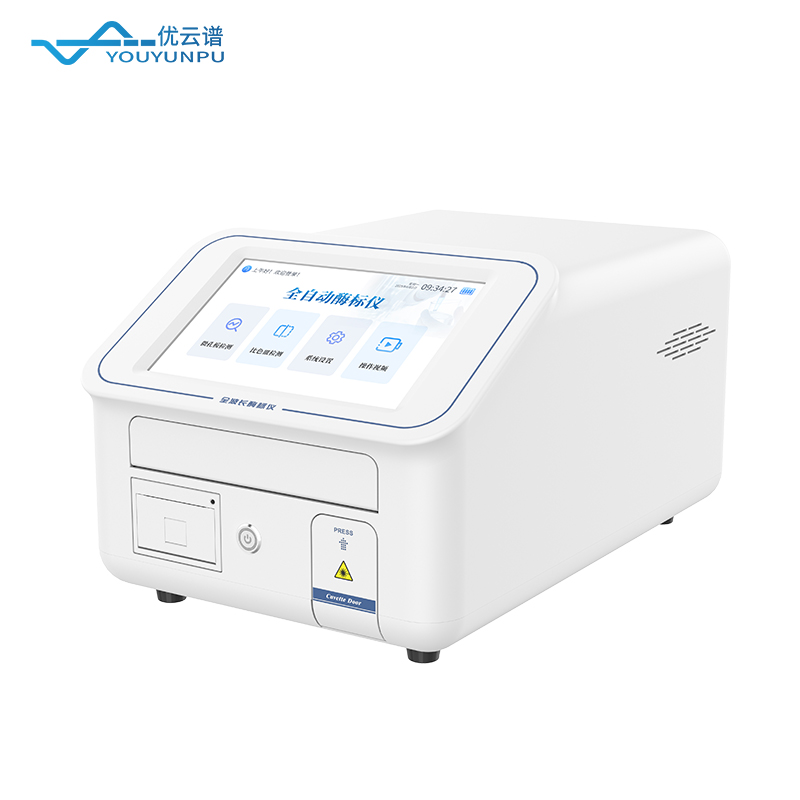
What is a full-wavelength microplate reader?
A full-wavelength microplate reader is an advanced analytical instrument based on the principle of photoelectric colorimetry. Its core feature is a light source that covers a broad spectrum from ultraviolet to visible light (typically 200–1000 nm), enabling full-band automatic scanning and fixed-point detection of samples in microplates.
Compared with filter-based microplate readers that can only use a few fixed wavelengths, a full-wavelength microplate reader is like having a continuously adjustable "color wheel," capable of capturing the complete spectral information of a sample. This delivers more comprehensive data, more flexible experimental designs, and more reliable conclusions.
Its core working principle is built on two cornerstones:
Lambert-Beer Law: The yardstick for precise quantification
This law is the theoretical foundation of spectrophotometry. When a beam of light passes through a sample solution, the analyte in the sample absorbs light of a specific wavelength. The intensity of absorption is proportional to the concentration of the substance and the path length. By measuring the intensity of transmitted light, the microplate reader accurately calculates the absorbance of the sample, thereby deducing the concentration of the target substance.
Full-spectrum scanning: Capturing the "spectral fingerprint" of a substance
This is the unique advantage of a full-wavelength microplate reader. By measuring the absorbance of the same sample at consecutive wavelengths, it generates a complete absorption spectrum curve.
Why is this valuable? This curve serves as the "identity fingerprint" of a substance. It not only helps researchers quickly determine the optimal detection wavelength but also enables substance purity identification, unknown contaminant recognition, and dynamic reaction process monitoring, providing deep insights for complex experiments.
Wide range of applications: Empowering multi-disciplinary research and testing
The versatility of the full-wavelength microplate reader makes it an indispensable tool across numerous fields:
Life science research
Protein concentration quantification (e.g., BCA, Bradford assays)
Enzyme kinetics studies (real-time monitoring of enzymatic reaction progress)
Cell proliferation and toxicity testing (e.g., MTT, CCK-8 assays)
Nucleic acid quantification and purity analysis
Drug discovery and screening
High-throughput screening (HTS)
Enzyme-linked immunosorbent assay (ELISA)
Reporter gene assays
Food safety and environmental monitoring
Rapid screening of pesticide residues, heavy metals, and toxins
Detection of water quality indicators (e.g., nitrates, phosphates)
Clinical diagnostics
Immunological testing for various disease markers
How to choose a suitable full-wavelength microplate reader?
When evaluating products on the market, focus on the following core parameters:
Wavelength range and bandwidth: A wider range supports broader applications; a narrower bandwidth delivers higher resolution.
Detection speed and throughput: Select based on your sample volume, and distinguish between fast and precise modes.
Optical path design: Dual-beam design significantly improves data stability and accuracy.
Temperature control and oscillation: Precise temperature control (e.g., 4°C–45°C) and adjustable oscillation are critical for ensuring uniformity in biochemical reactions.
Detection sensitivity and linear range: Ensure the instrument meets the concentration range of your target samples.
Software usability and data output: An intuitive interface, flexible data analysis functions, and diverse output formats (e.g., images + tables) are essential.
Summary
With its comprehensive spectral information, high detection throughput, exceptional precision, and stability, the full-wavelength microplate reader has become a standard piece of equipment in modern biochemical laboratories. It is no longer just a "concentration reader" but a powerful spectral analysis platform, providing researchers with in-depth, high-dimensional data insights.
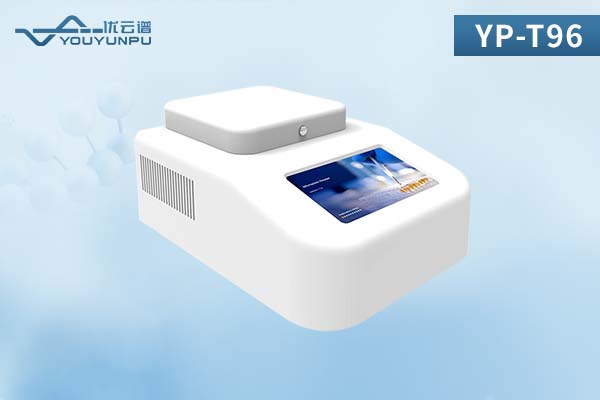
Gradient PCR Thermal Cycler
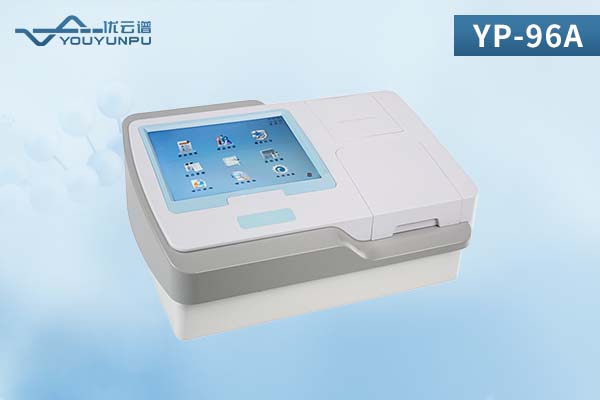
Microplate Reader
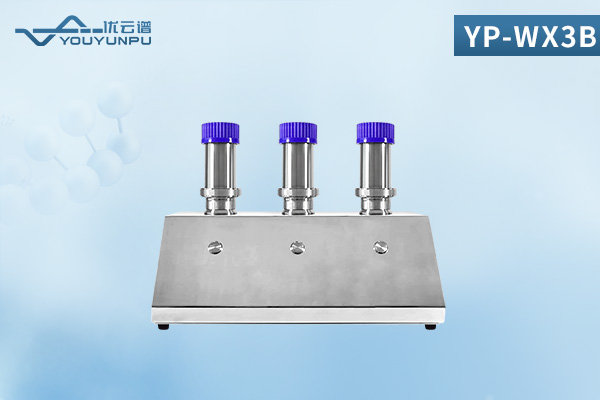
Microbial Limit Tester
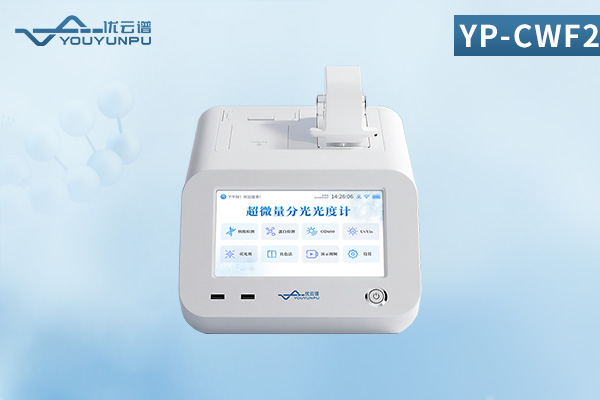
Nucleic Acid and Protein Concentration Analyzer
Which brand of full-wavelength microplate reader is good? Youyunpu leads new scientific research standards with precision and efficiency.
2026-02-02Automatic Colony Analyzer: An Intelligent Solution for Modern Microbiology Laboratories
2026-02-02Full-Wavelength Microplate Reader: An All-Round Spectral Analysis Platform for Insight into the Microscopic World
2026-02-02How Does a Real-Time Quantitative PCR (qPCR) Detector Work? Principles and Applications in One Article
2026-02-02Which brand is good for microbial broth concentration meters? Youyunpu D600 leads a new research experience.
2026-02-02Microbial Limit Filtration System Manufacturer Recommendation: Youyunpu Guards the Cleanliness Bottom Line of Experiments with High Efficiency and Reliability
2026-02-02Brand Recommendation for Handheld Portable Fluorometers: Youyunpu Fluorometers Enable Accurate and Rapid Detection
2026-02-02Youyunpu Fluorescent Quantitative PCR Detector Manufacturer Analysis: How Does the Technical System Support Stable Nucleic Acid Detection?
2026-02-02